
Time Travel Diaries: Exploring Prague Pt.2 - Cafe Louvre
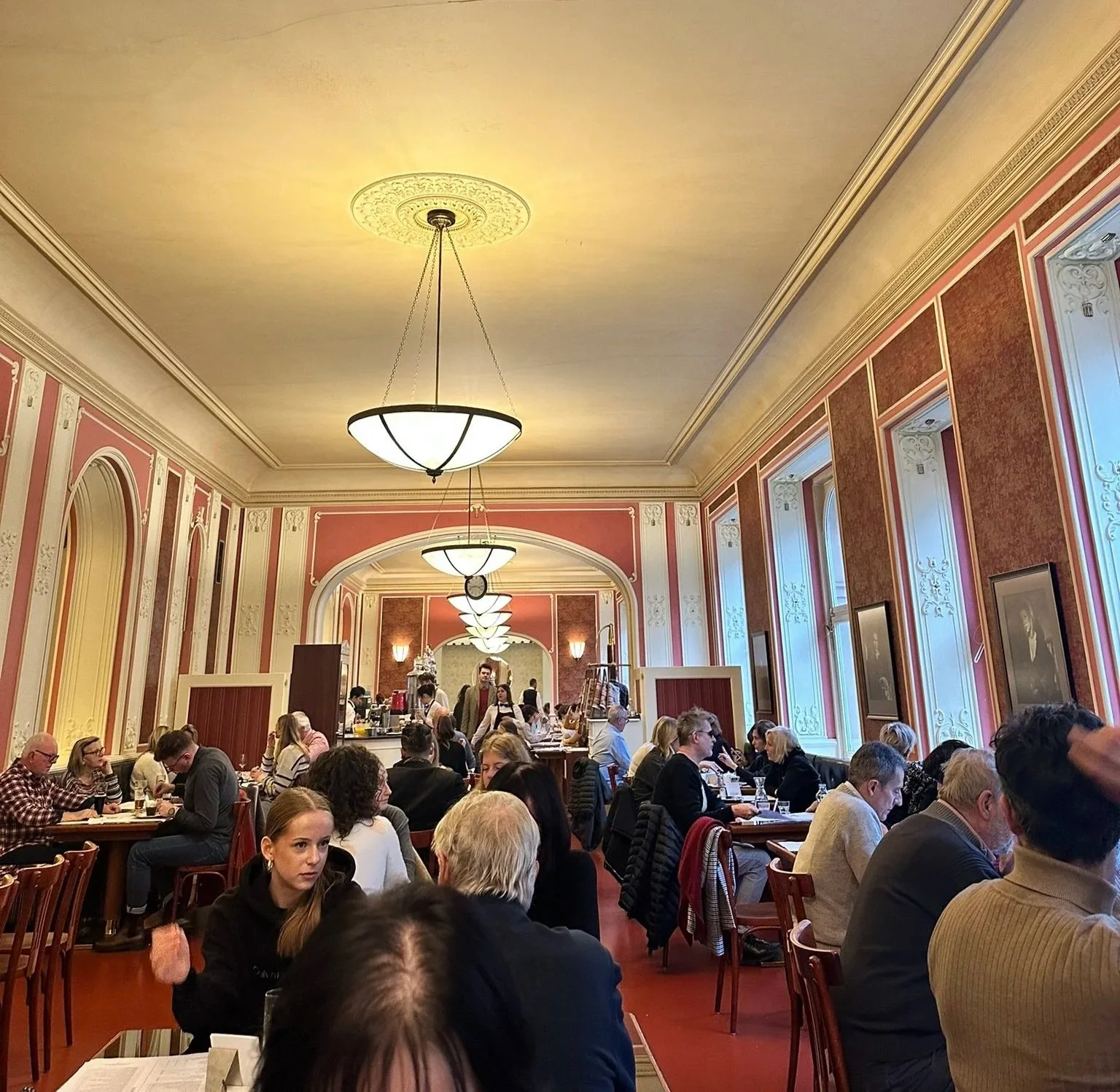
After the soaring spires and political drama of Prague Castle, I wanted Part 2 of this series to explore a different kind of historical space—one without crowns or cathedrals, but with just as much intellectual weight. Because history isn’t only written in royal decrees and battlefield victories. Sometimes, it’s shaped in conversation. Sometimes, it happens over coffee.
That’s what drew me to Café Louvre.
On paper, I expected a beautiful, historic café—ornate ceilings, polished wood, perhaps a slightly romanticised nod to the past. In reality, it felt far more alive than that. Opened in 1902, Café Louvre quickly became one of Prague’s great meeting places for writers, scientists, artists, and political thinkers. This wasn’t simply somewhere to sit; it was somewhere to debate, to argue, to theorise.
Most famously, Albert Einstein was a regular here during his time teaching in Prague between 1911 and 1912. The idea that relativity might have been discussed beneath these chandeliers is almost surreal. Even more evocative is the knowledge that Franz Kafka and his close friend Max Brod were also known to frequent the café. Sitting there, coffee cup in hand, you can’t help but glance around and wonder which corner table might once have hosted them. Which conversations unfolded here that subtly altered literature, science, or philosophy?
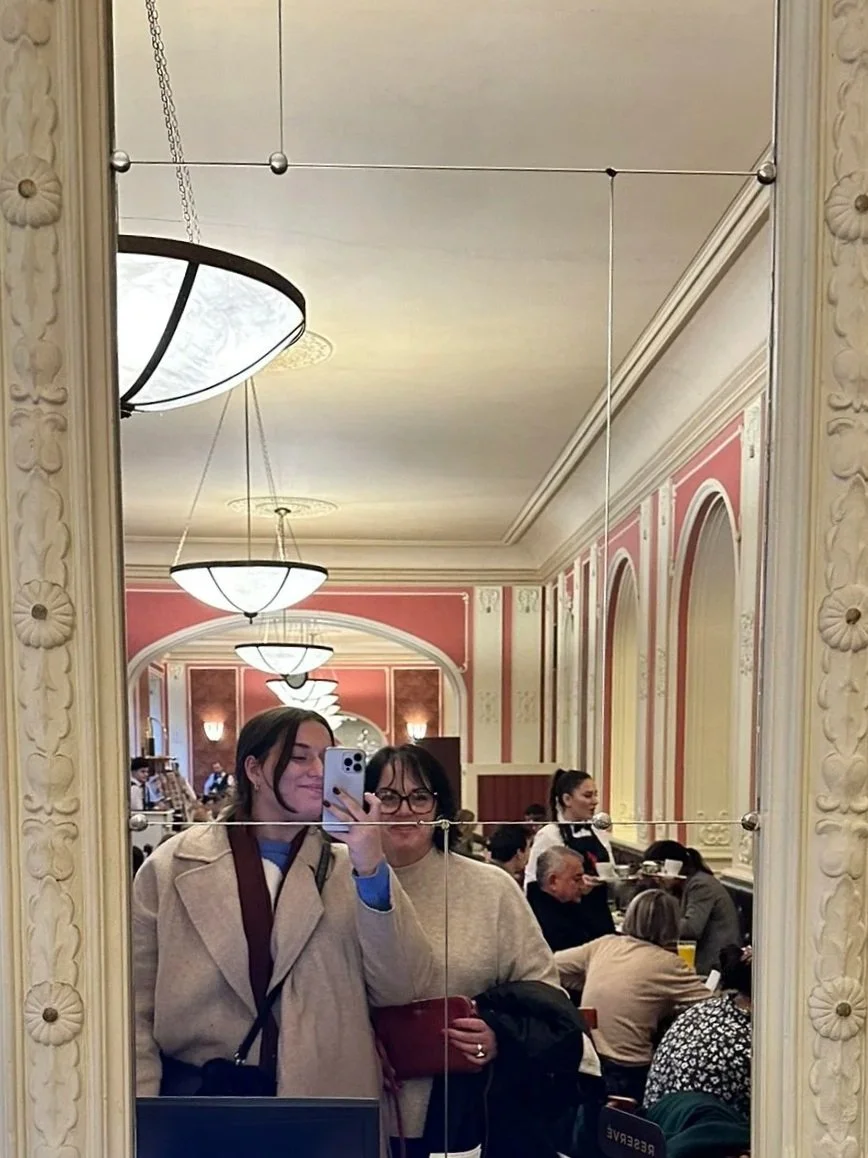
What struck me most was that Café Louvre doesn’t feel like a preserved relic. It hasn’t been frozen in time for tourists to photograph and leave. It still functions as a true café—busy, conversational, slightly chaotic in the best possible way. There’s a comforting hum to the room: cutlery clinking, low conversations in Czech and English, the soft rhythm of waiters weaving between tables. The high ceilings and chandeliers lend a sense of elegance, but there’s nothing intimidating about the space. It feels democratic. Students sit with laptops, older locals linger over long lunches, visitors pause between sightseeing stops. The past and present exist comfortably together.
The interior itself is spacious and airy, with tall windows and warm wooden floors that soften the grandeur. It feels slightly Parisian, slightly Viennese, but distinctly Prague in its intellectual heritage. Upstairs, there’s even a billiards room, which deepens the early-20th-century atmosphere. It’s easy to imagine smoke curling toward the ceiling a century ago as heated debates unfolded across the tables.
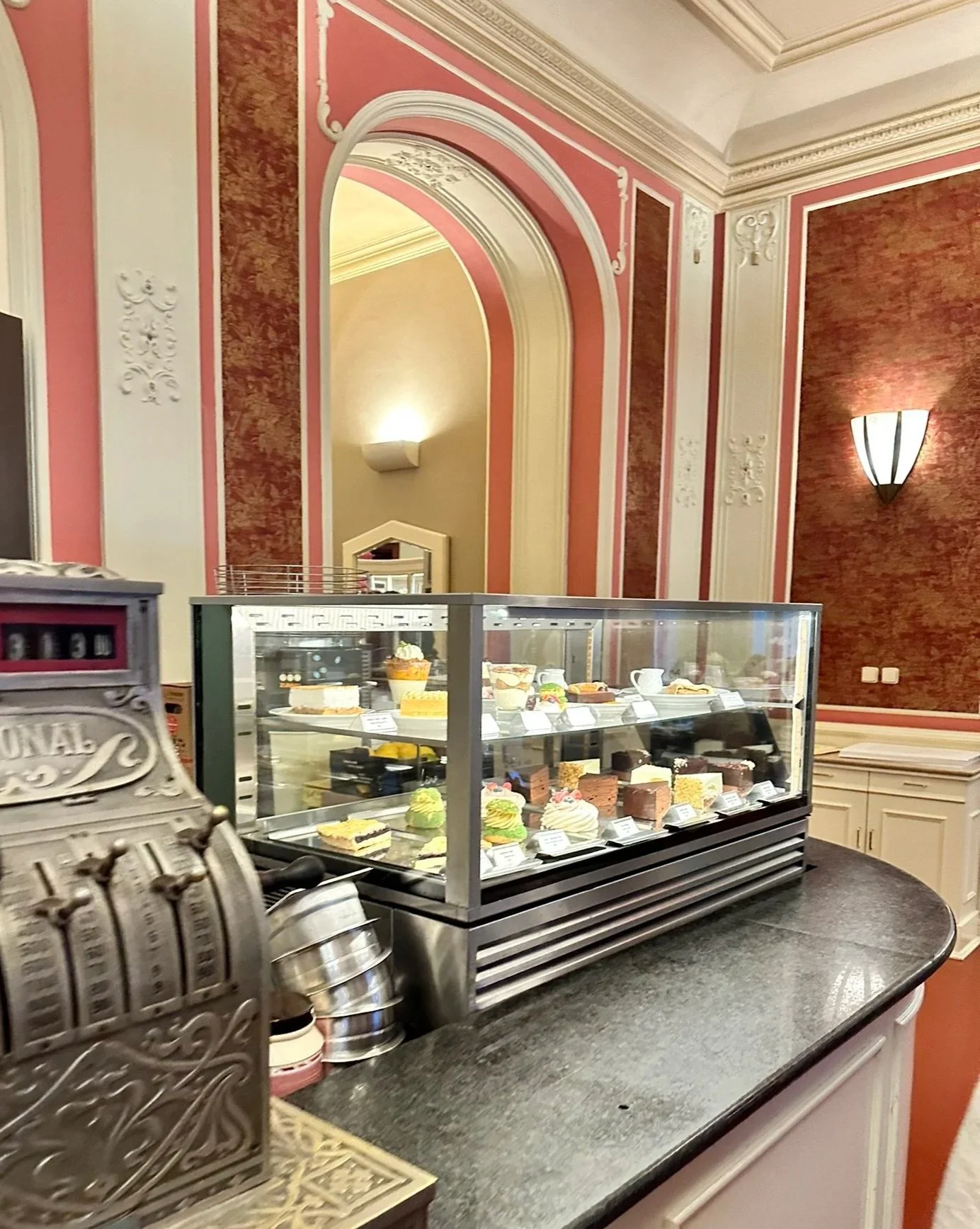
And then there’s the simple pleasure of it: sitting down and giving yourself permission to stay. I had originally planned a practical visit—lunch here, then somewhere else later for the obligatory afternoon sweet treat. But those plans quietly dissolved. The quality of the food, paired with an impressively extensive dessert selection shown here, made it impossible not to order something sweet to finish. One course turned into two, and time stretched comfortably.
What I thought would be a brief stop became an unhurried pause in the day. Café Louvre doesn’t rush you; it subtly insists that you linger. In a city celebrated for its dramatic skylines and Gothic grandeur, this felt like a gentler form of time travel—less about spectacle and more about atmosphere, reflection, and the quiet luxury of staying put.
There’s something particularly powerful about Central European café culture. These spaces were once informal universities, places where politics, literature, and science were argued into existence. Visiting Café Louvre felt like stepping into that tradition. Not dramatic, not theatrical—just quietly significant.
Need to Know: Tips for Visiting Café Louvre
Avoid peak lunch and dinner hours if you want a calmer atmosphere. Mid-morning or mid-afternoon is ideal for lingering.
Plan to stay a while. This isn’t somewhere to rush through. The experience is in the pause.
Look around before you look at your phone. The architectural details and the scale of the room are part of the experience.
Try something traditional alongside your coffee. It makes the visit feel less like a photo stop and more like participation in the culture.
Sit with the history. Even a few minutes of imagining the conversations that once filled the room adds a new dimension to the visit.
If Prague Castle represents power carved in stone, Café Louvre represents power spoken aloud. It may not dominate the skyline, but it holds something equally compelling: the quiet, persistent force of ideas.
And sometimes, that’s the most meaningful form of time travel there is.
