
Radical Harmony Helene Kröller-Müller's Neo-Impressionists - Exhibition Review
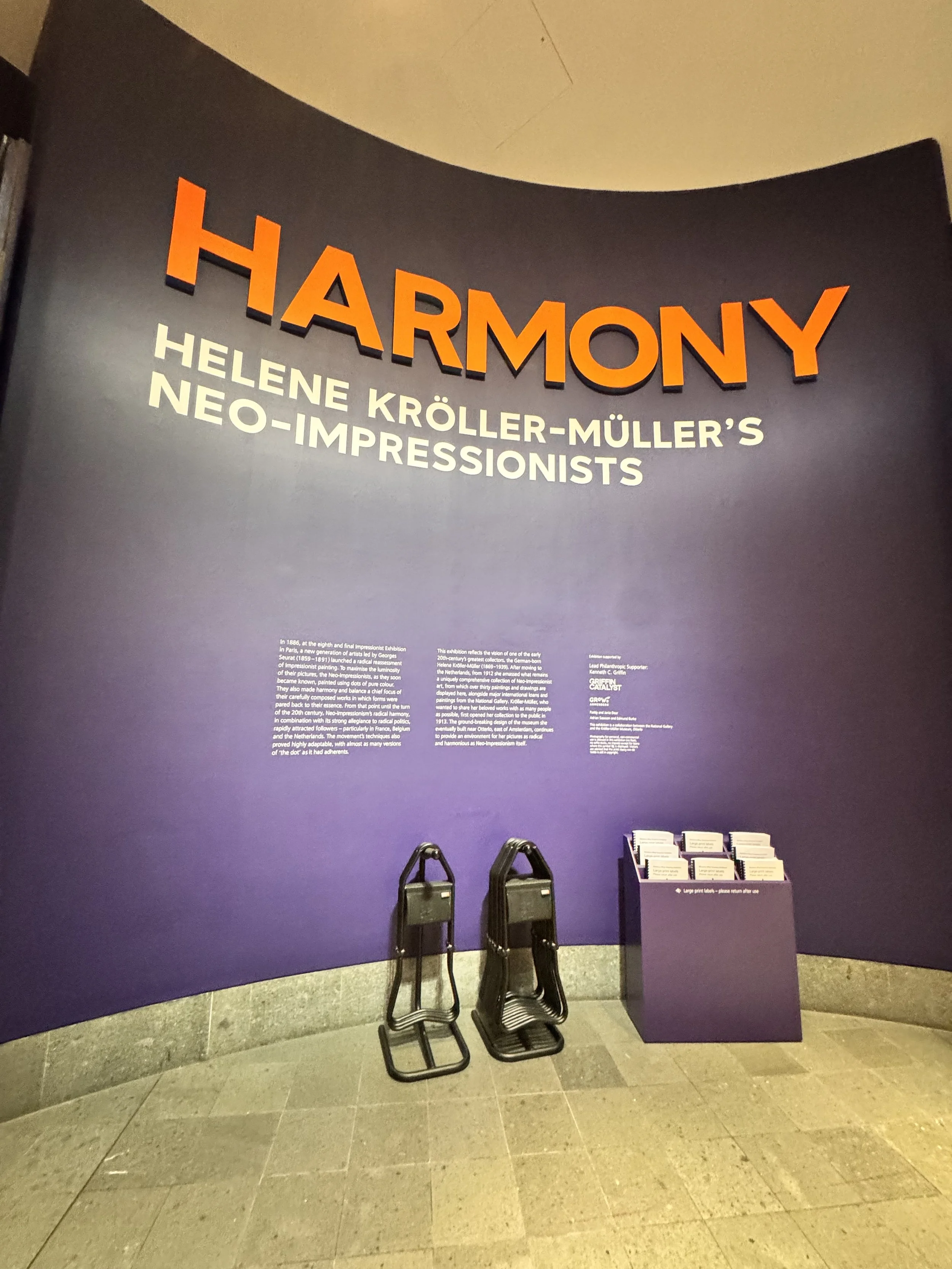
If you enjoy exhibitions that invite you to slow down and really look, the National Gallery’s Radical Harmony: Helene Kröller-Müller’s Neo-Impressionists is a genuinely rewarding visit. Combining beautiful works with thoughtful, accessible interpretation, the exhibition gently unpacks the ideas behind Neo-Impressionism while offering a calm, unhurried space to engage — the kind of show that stays with you long after you leave the gallery.
Content Quality:
Rating: ⭐️⭐️⭐️⭐️⭐️ - Excellent
The exhibition opens with an exceptionally strong introductory text that clearly establishes the historical and intellectual context of Neo-Impressionism, explaining when the movement emerged and why it mattered. Rather than presenting the artists in isolation, the interpretation thoughtfully situates them within wider developments in art theory and scientific approaches to colour and perception. Equally effective is the way Helene Kröller-Müller is framed: not simply as a wealthy collector, but as an influential figure whose intellectual engagement and vision actively shaped the legacy and reception of these works.
The early focus on colour theory is particularly successful. Concepts such as optical mixing and systematic colour application are explained with clarity, making them accessible to visitors with little or no prior knowledge, while still offering enough depth to engage those already familiar with these ideas. This allows colour theory to function as an underlying theme throughout the exhibition rather than a one-off explanation, encouraging visitors to continually reconsider what they are seeing as they move from room to room.
Curatorial choices further support this clarity of interpretation. The neutral background in the opening gallery is especially effective, allowing visitors to concentrate fully on the colours within the paintings themselves, free from the visual interference of brightly coloured walls. In addition, the exhibition’s links to related works elsewhere in the National Gallery invite visitors to deepen their understanding through direct comparison, offering new perspectives even for those who know the collection well. Together, these elements create a content-rich exhibition that is both intellectually rigorous and highly accessible.
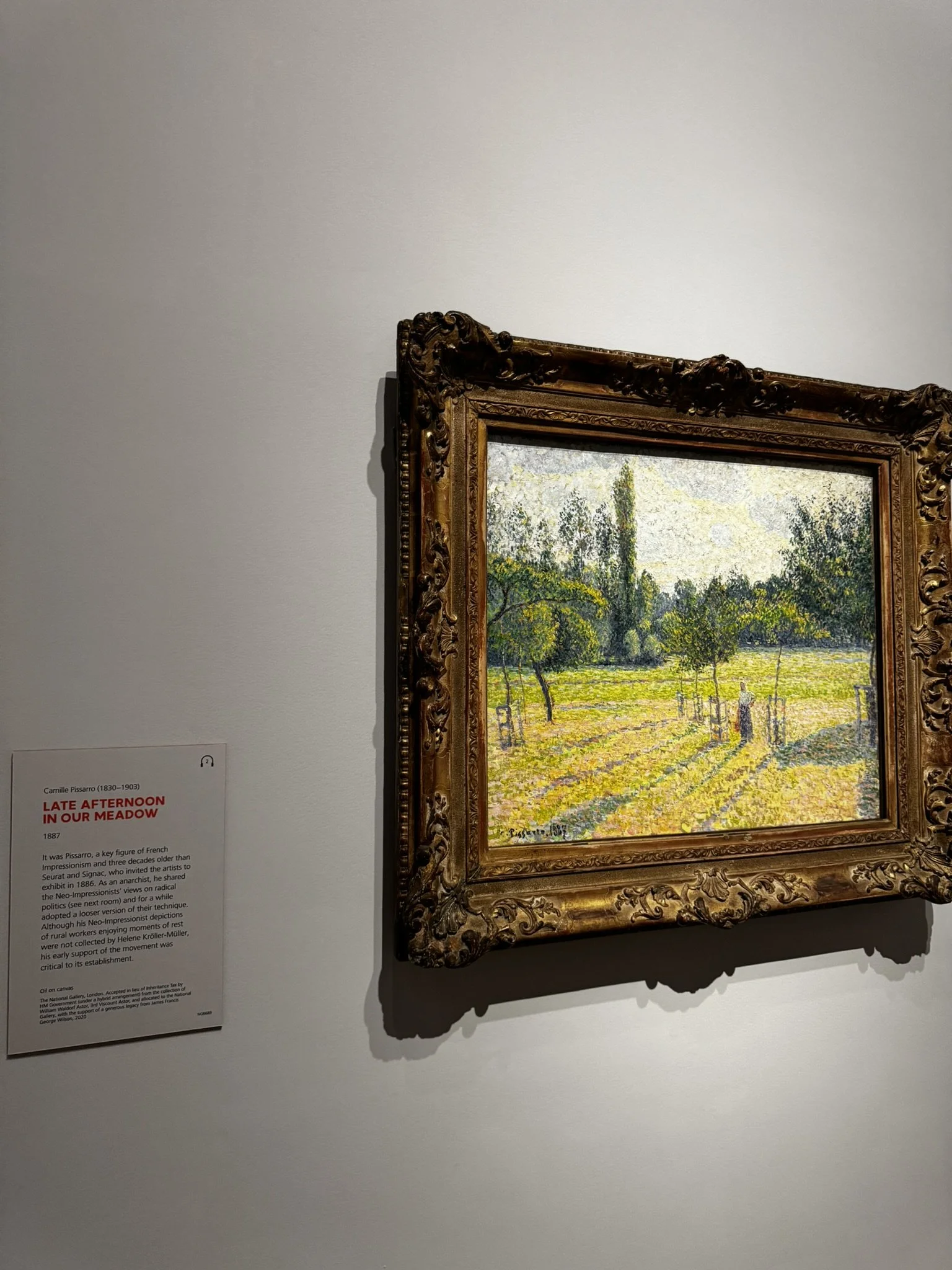
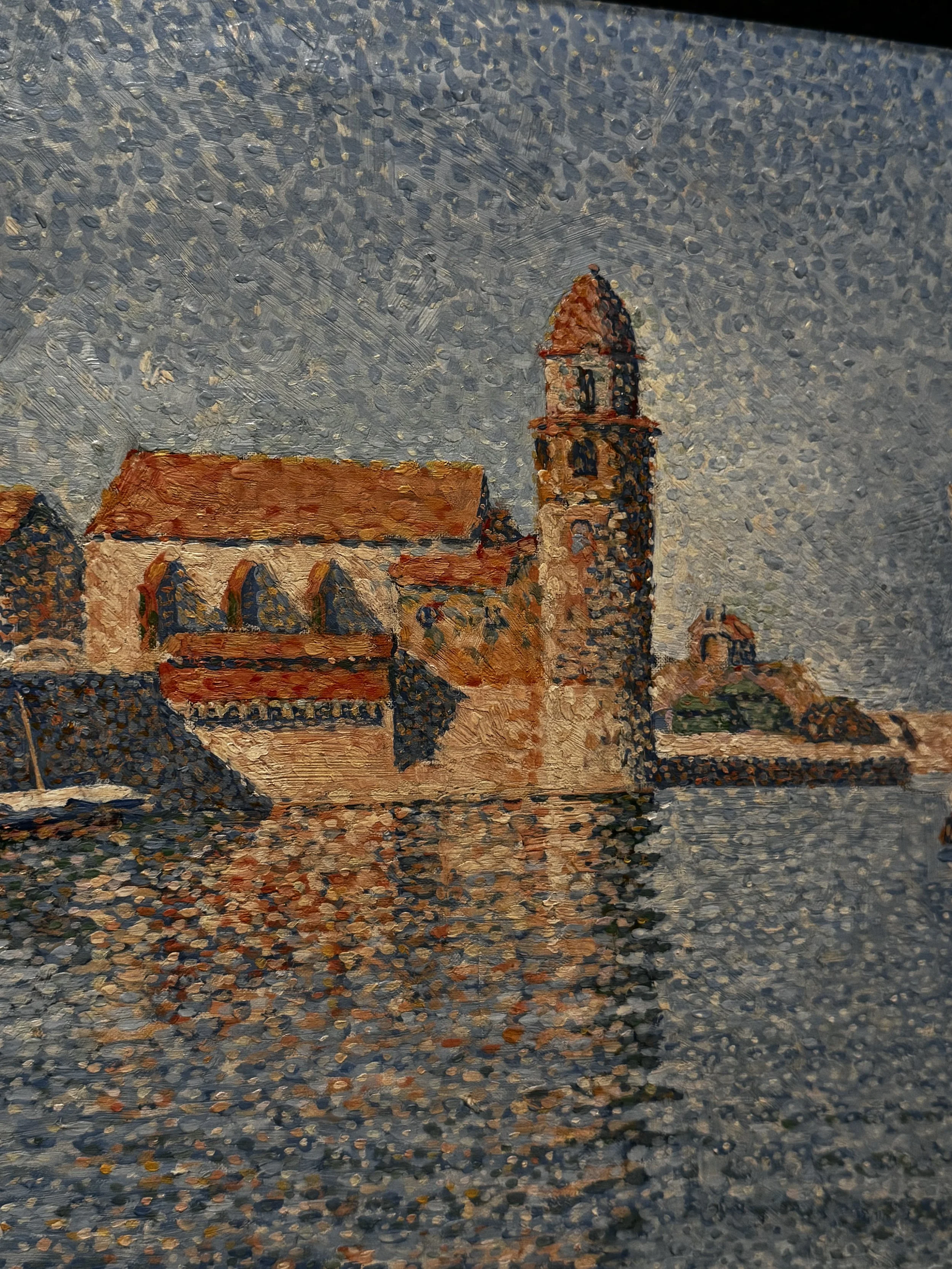
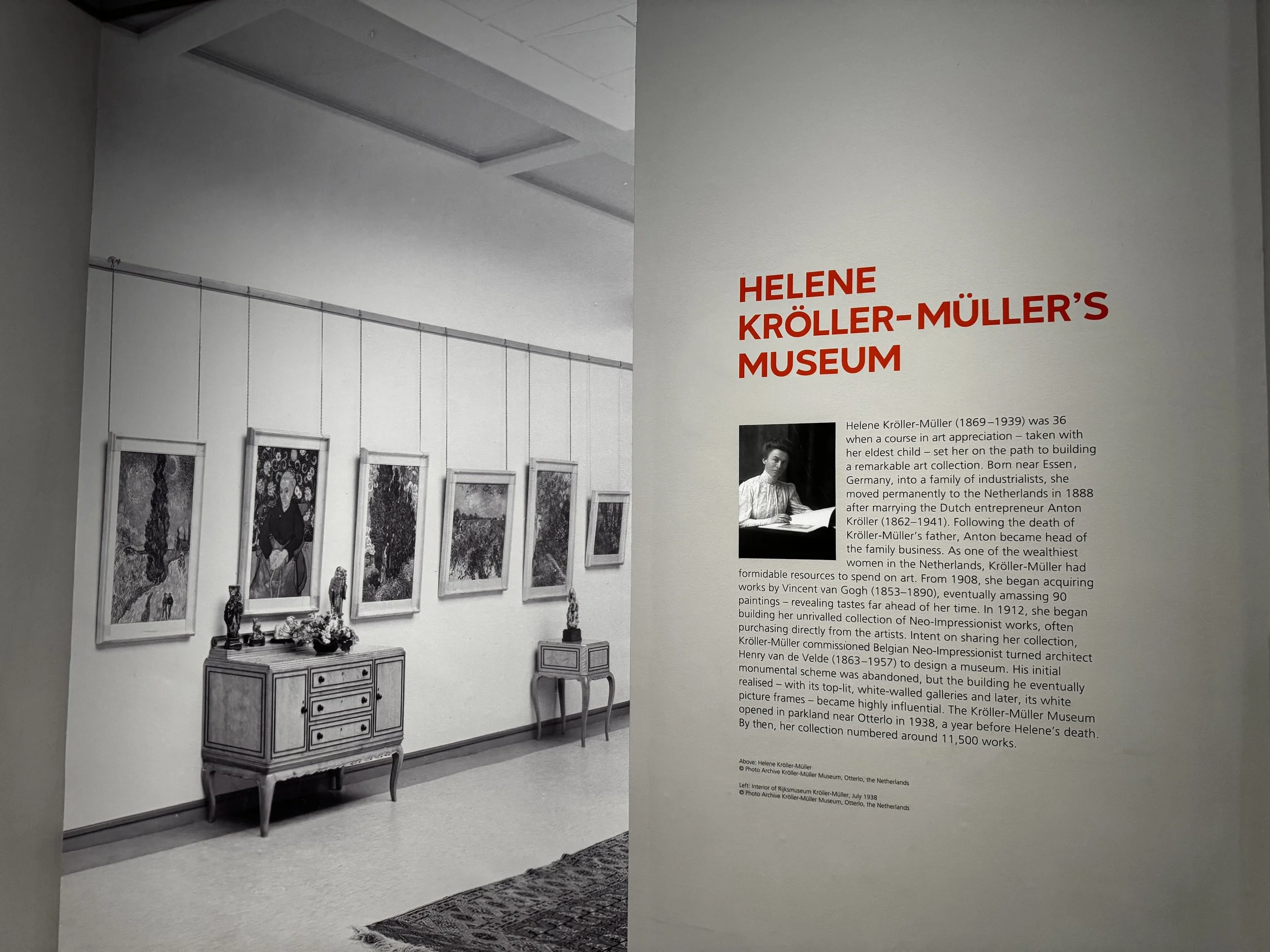
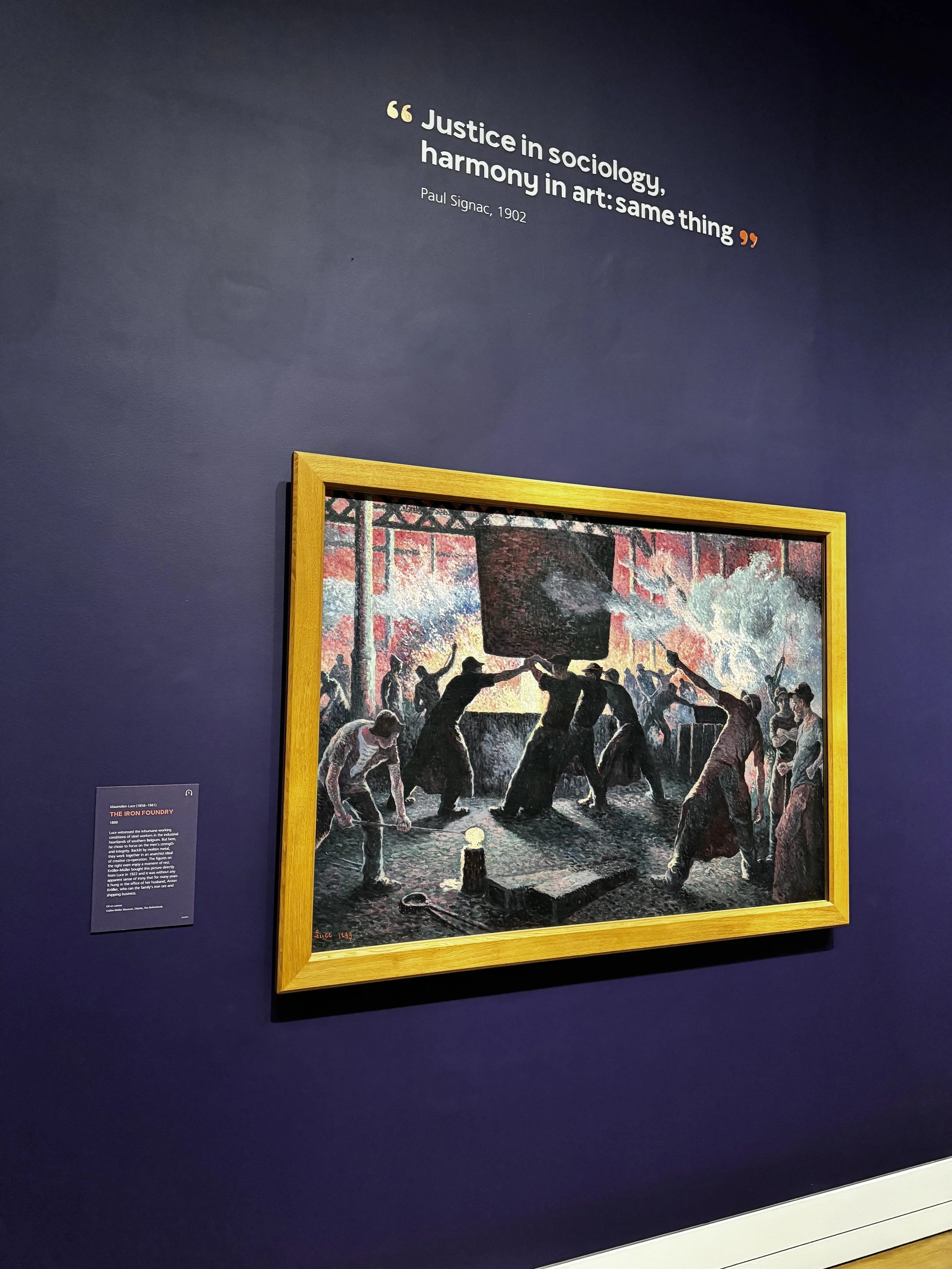
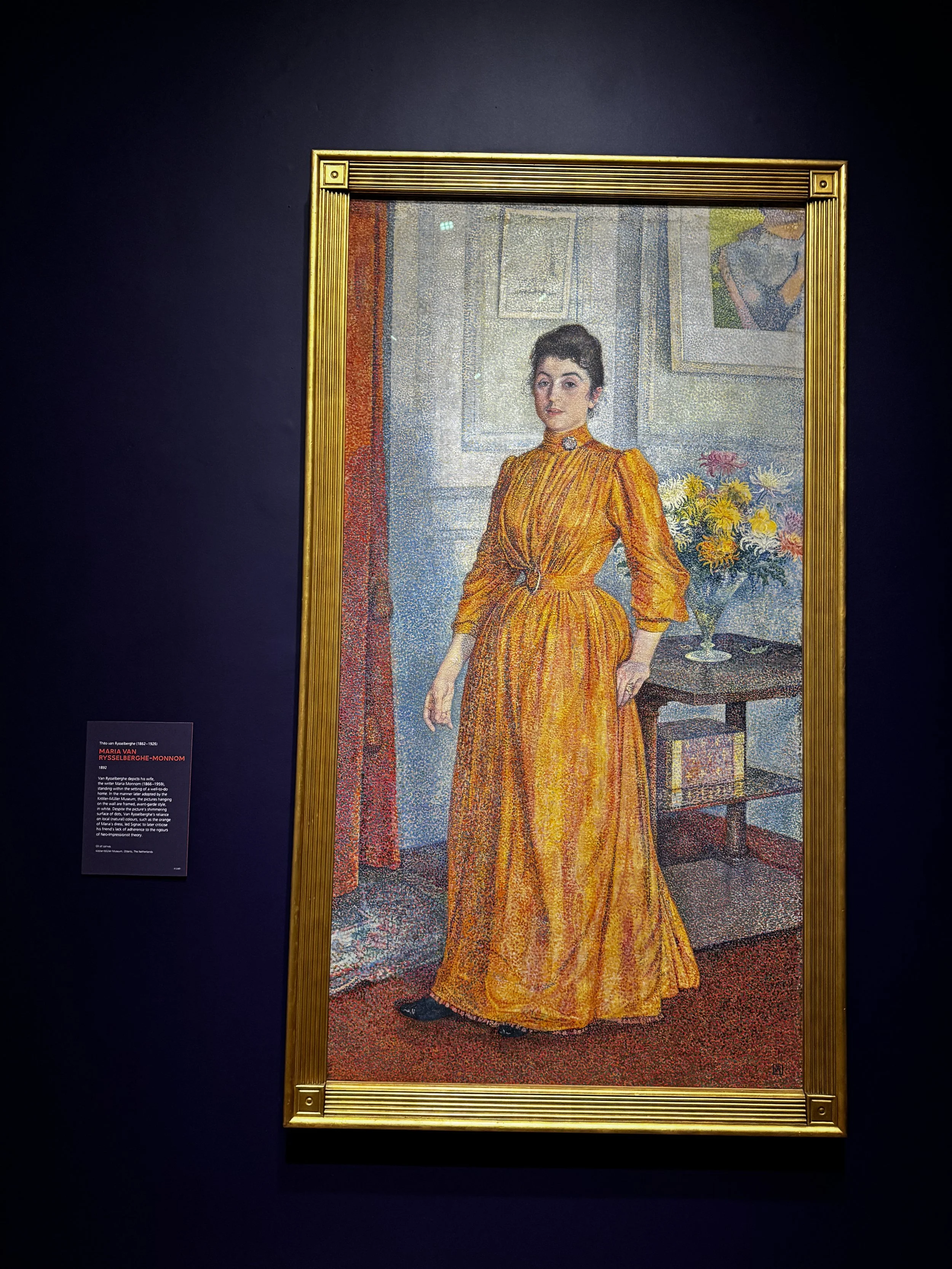
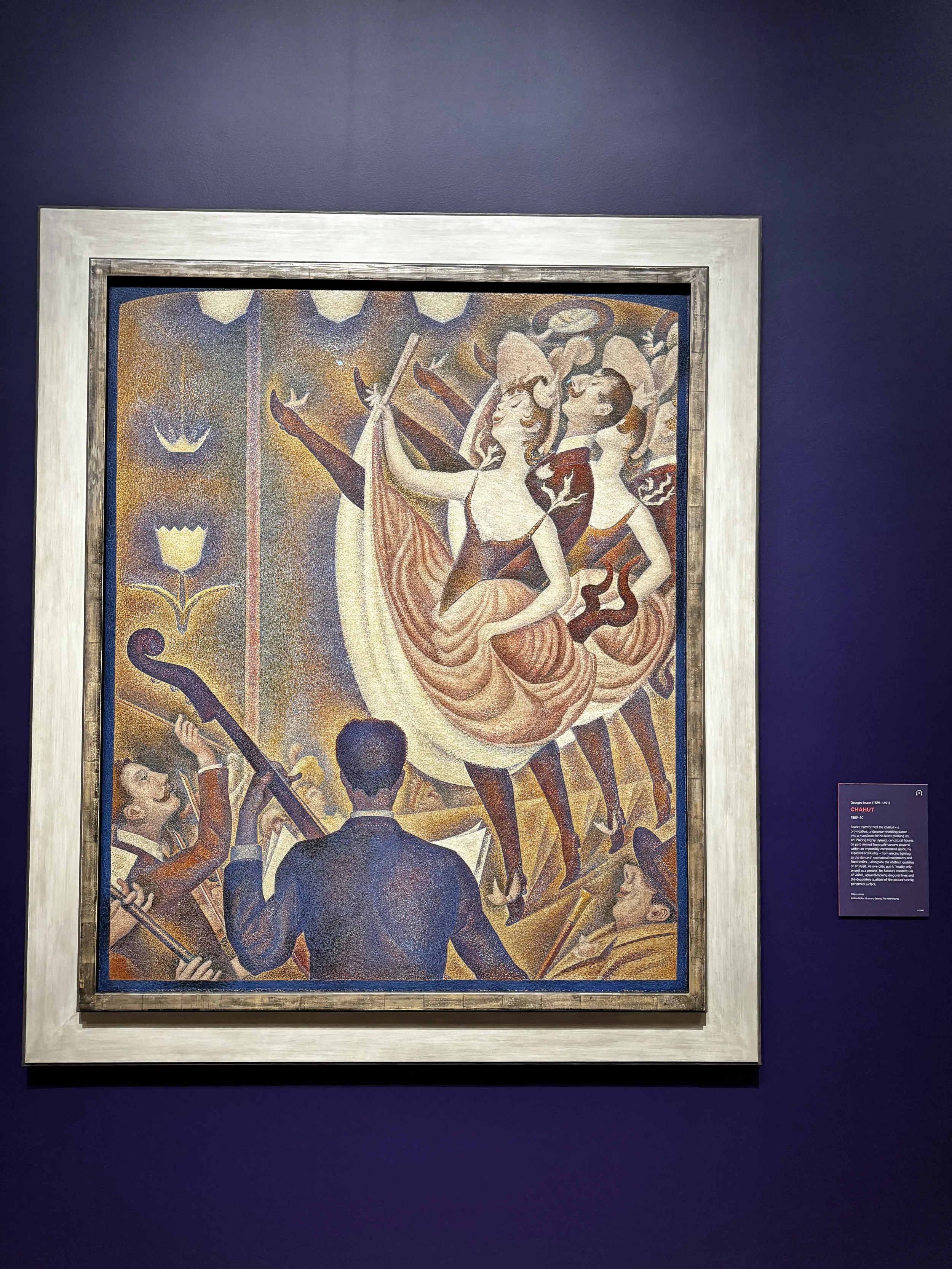
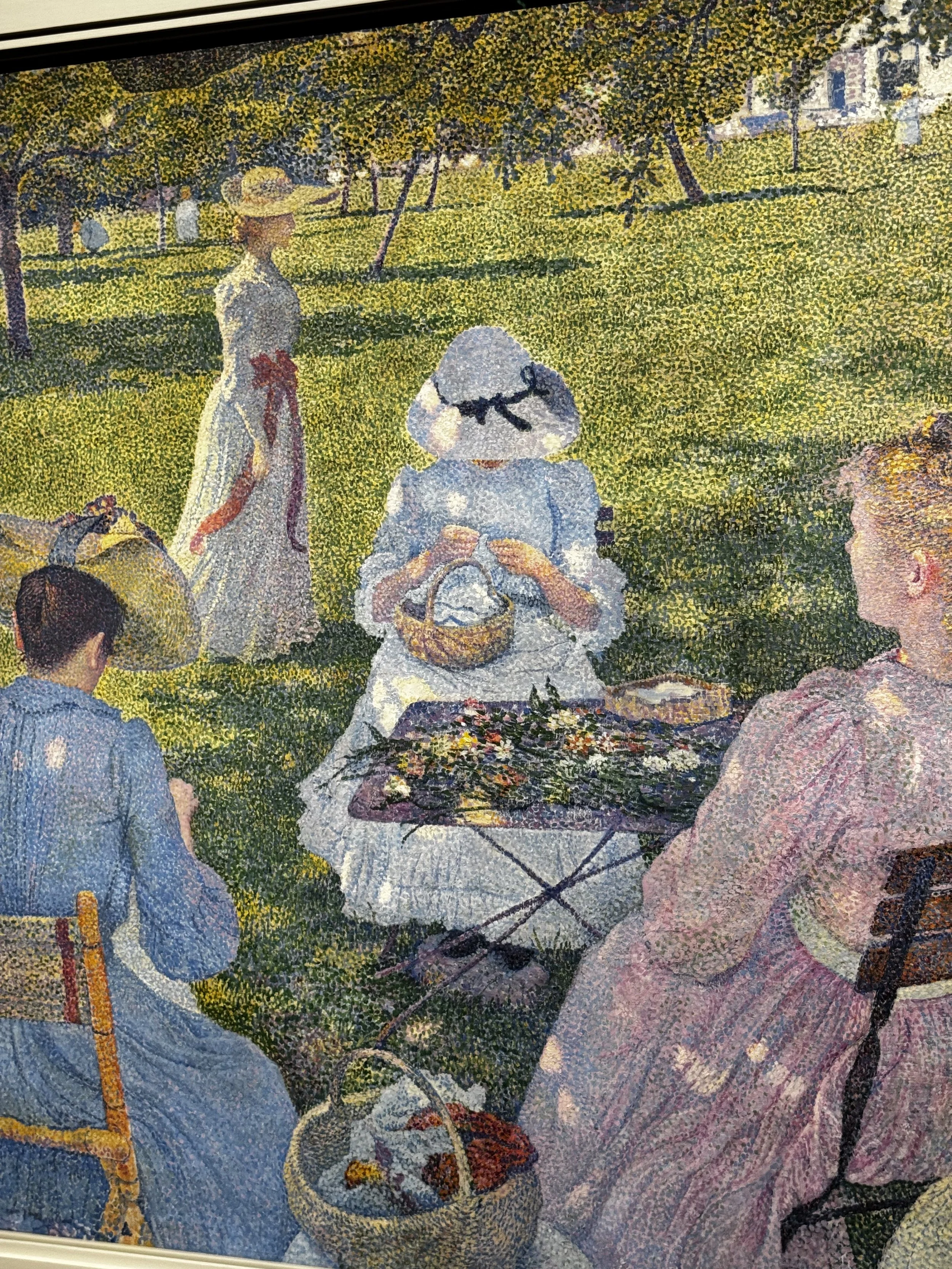
Ambience
Rating: ⭐️⭐️⭐️⭐️ — Very Good
The ambience of the exhibition is calm, considered, and highly conducive to close looking. The first gallery is notably light, bright, and open, immediately allowing the paintings to stand out and emphasising the precision of colour and detail within each work. This openness sets the tone for the exhibition as a whole, encouraging visitors to slow down and engage visually rather than feeling rushed through the space.
While the rooms do feel large in comparison to the often small and intimate scale of the Neo-Impressionist paintings, this ultimately works in the exhibition’s favour. The generous spatial layout ensures a smooth flow throughout the galleries and successfully avoids issues of crowding or visual overload. At no point does the space feel busy or distracting, allowing sustained concentration on individual works — something particularly important given the subtlety of colour relationships and optical effects on display.
Background wall colours shift from room to room, between a neautral grey, and a rich purple, reflecting the thematic focus of each section. These changes feel deliberate and restrained, remaining within a cohesive tonal palette that complements rather than competes with the artworks. This careful use of colour subtly reinforces the exhibition’s conceptual focus while maintaining visual harmony across the galleries.
The overall atmosphere is notably serene. Visitor numbers were very low at the time of visiting — around thirty minutes before closing on a Sunday afternoon — which undoubtedly enhanced the experience. However, even accounting for timing, the contrast with the flow and density of the Van Gogh: Poets and Lovers exhibition is striking. Here, it was possible to move through the space at a self-directed pace, spending time with individual paintings and engaging closely without the pressure of crowds or the familiar scramble for a clear view. This sense of calm significantly enhances the exhibition’s impact, allowing the works to be appreciated on their own terms.
Accessibility
Rating: ⭐️⭐️⭐️⭐️⭐️ — Excellent
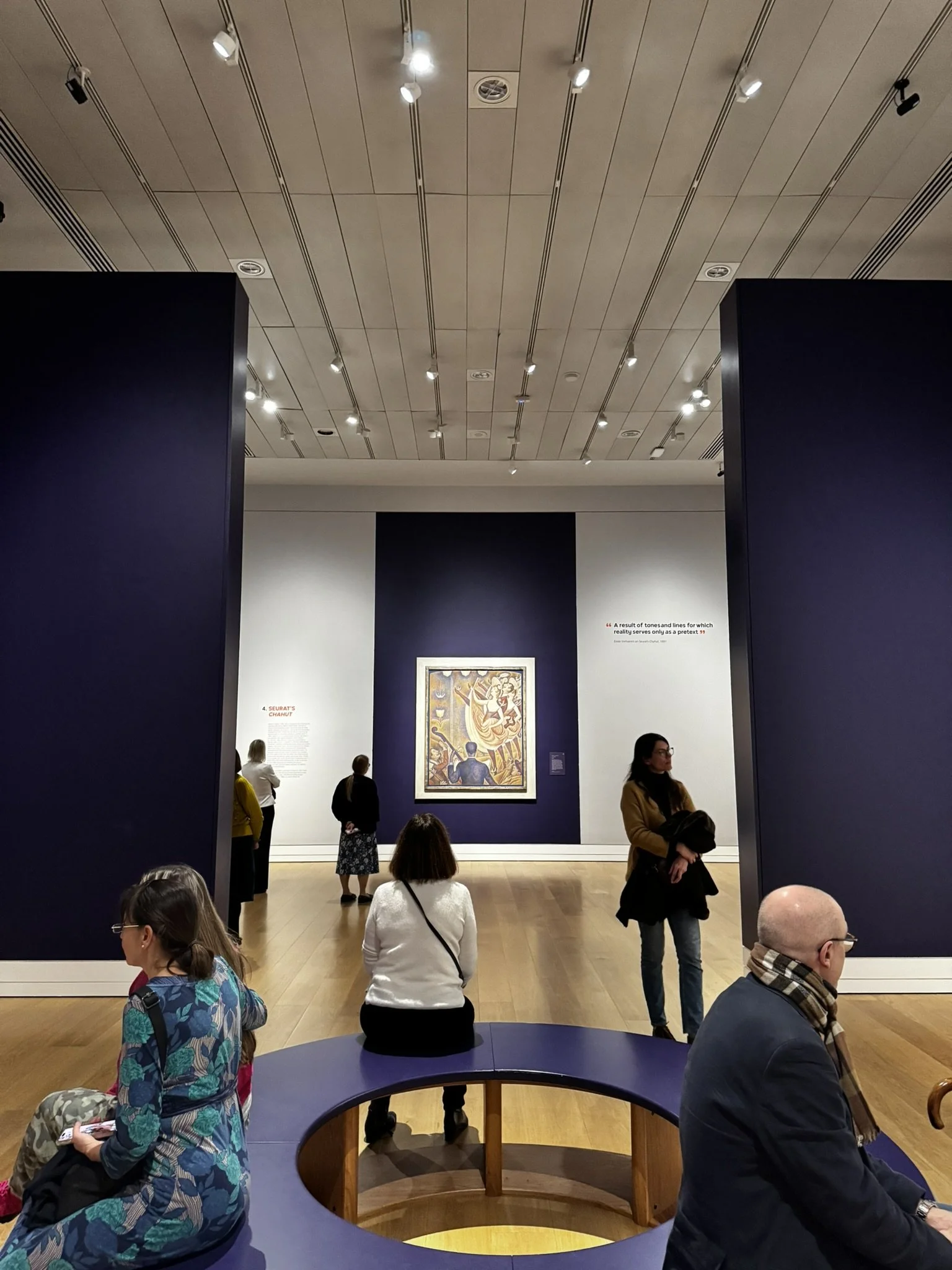
Accessibility is thoughtfully embedded throughout the exhibition, both in its physical layout and interpretive design. The open floor plan allows for easy movement through the galleries, and the entire route — from the main gallery entrance through to the exhibition spaces — is step-free, ensuring full accessibility for wheelchair users and visitors with mobility requirements.
Seating provision, while limited in terms of permanent fixtures, is handled considerately. There are few fixed benches within the exhibition galleries themselves; however, this is effectively supported by the availability of portable seating at the start of the exhibition. These portable seats are clearly identified and easily accessible, allowing visitors to rest where needed and engage with the artworks at their own pace without reliance on static seating.
From an interpretive standpoint, accessibility is equally well considered. Large-print label books are readily available and clearly signposted at the exhibition entrance, supporting visitors with visual impairments. Artwork labels use strong colour contrast and clear typography, making text easy to read across varying wall colours. Introductory texts are particularly effective, providing accessible entry points for visitors unfamiliar with Neo-Impressionism while subtly incorporating deeper layers of interpretation that continue to engage those with a more advanced understanding of the subject matter. From personal experience, this stands out as one of the most accessible exhibitions for adult audiences that the National Gallery has delivered, demonstrating a clear commitment to inclusive design without compromising intellectual depth.
Visitor Engagement
Rating: ⭐️⭐️⭐️ — Good
Visitor engagement within the exhibition is intentionally restrained, favouring a traditional, object-led approach over interactive or digital enhancements. There are few opportunities for active engagement beyond the core experience of viewing the artworks and reading the accompanying interpretive texts. No interactive displays or hands-on elements are included, which may limit appeal for visitors seeking more participatory forms of engagement.
That said, the exhibition makes effective use of interpretive linking to encourage deeper exploration. Wall texts frequently reference related artworks elsewhere in the National Gallery collection, for example noting when a particular painting was inspired by another artist or work and directing visitors to where that related piece can be found within the main gallery spaces. This approach subtly extends the exhibition beyond its physical boundaries, encouraging visitors to make connections across the wider collection.
While engagement remains largely intellectual rather than experiential, this curatorial choice aligns with the exhibition’s calm and contemplative tone. For visitors willing to engage through close looking and comparative thinking, these contextual links offer a meaningful — if understated — form of interaction.
Gift Shop and Café
Rating: ⭐️⭐️⭐️⭐️⭐️ — Excellent
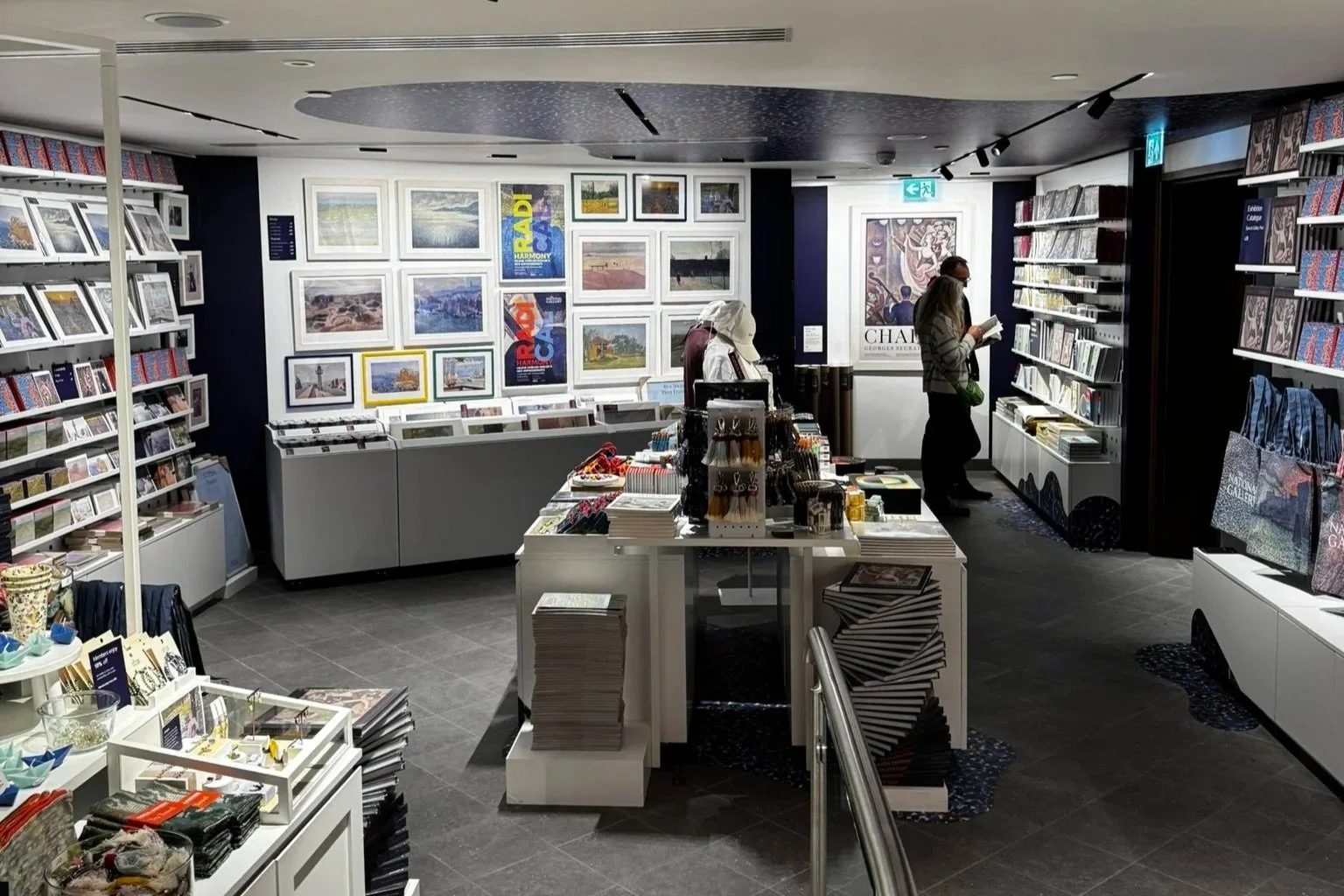
The National Gallery’s gift shop curation continues to demonstrate a consistently high standard, and this exhibition is no exception. The main and permanent shops already offer an impressive range of intellectually engaging, creatively designed, decorative, and child-friendly items, all available across a broad spectrum of price points. This balance ensures accessibility for casual visitors while still appealing to collectors and design-conscious audiences.
The National Gallery’s gift shop curation continues to demonstrate a consistently high standard, and this exhibition is no exception. The main and permanent shops already offer an impressive range of intellectually engaging, creatively designed, decorative, and child-friendly items, all available across a broad spectrum of price points. This balance ensures accessibility for casual visitors while still appealing to collectors and design-conscious audiences.
The exhibition-specific shop, however, elevates this experience even further. Carefully curated to reflect the visual language of Radical Harmony, the space mirrors the exhibition’s colour palette, incorporating playful bursts of design that subtly echo the aesthetic qualities of Neo- and Impressionist artworks. The result is a shop that feels like a natural extension of the exhibition rather than an afterthought.
A particularly strong offering is the range of postcards, prints, and posters, allowing visitors to take home a tangible fragment of the exhibition regardless of budget. The inclusion of exhibition catalogues, art books, and thoughtfully selected art materials encourages continued engagement beyond the gallery, inviting visitors to experiment with and recreate techniques explored in the show. These items span from affordable learning tools to more luxurious purchases, reinforcing the Gallery’s commitment to quality, inclusivity, and educational value.
Overall Value
Rating: ⭐️⭐️⭐️⭐️⭐️ — Excellent
With standard admission priced at £20 during off-peak periods (Sunday–Thursday) and £27 on Fridays and Saturdays, the exhibition offers strong value for money when weighed against the quality and depth of content on display. The price point feels proportionate to the calibre of the artworks, the rarity of seeing such a concentrated Neo-Impressionist display in London, and the clarity and generosity of the curatorial interpretation.
The exhibition delivers a richly layered experience, combining high-quality loans with carefully constructed introductory texts and a coherent thematic flow that supports both first-time visitors and those with prior knowledge. The calm pacing of the galleries and the ability to engage closely with individual works — without crowd pressure — further enhances the sense of value, allowing visitors to fully benefit from what is offered rather than feeling rushed.
Concession rates for disabled visitors, jobseekers, NHS and Emergency Services workers, and Museums Association cardholders further strengthen the exhibition’s accessibility and inclusivity, ensuring that cost is less of a barrier to engagement. Taken together, the ticket price aligns well with the intellectual, visual, and experiential return, making Radical Harmony a considered and worthwhile visit that comfortably justifies its admission fee.
Final Rating
⭐️⭐️⭐️⭐️ 4.5 out of 5
Radical Harmony: Helene Kröller-Müller’s Neo-Impressionists delivers a thoughtfully curated, intellectually rich, and highly accessible exhibition experience. From its clear and engaging interpretive content to its calm spatial design and excellent value for money, the exhibition succeeds in making a complex artistic movement both approachable and rewarding. Strong curatorial decisions, generous pacing, and an outstanding supporting offer — from accessibility provisions to the exhibition shop — combine to create an exhibition that is not only cohesive and well-executed, but genuinely memorable.
Exhibition Title: Radical Harmony: Helene Kröller-Müller’s Neo-Impressionists
Location/Venue: The National Gallery, Trafalgar Square, London WC2N 5DN
Dates of Exhibition: 13 September 2025 – 8 February 2026
Type of Exhibit: Art exhibition exploring Neo-Impressionism through the pioneering collection of Helene Kröller-Müller, featuring works by key figures such as Georges Seurat, Paul Signac, and their contemporaries. The exhibition examines the movement’s foundations in colour theory, scientific approaches to painting, and its lasting influence on modern art.
Cost of Entry:
Standard Admission: £20 (off-peak, Sunday–Thursday) £27 (Friday and Saturday)
Concessions: Available for disabled visitors, jobseekers, NHS and Emergency Services workers, and Museums Association cardholders.
Members: Free admission; members can access sold-out dates.
